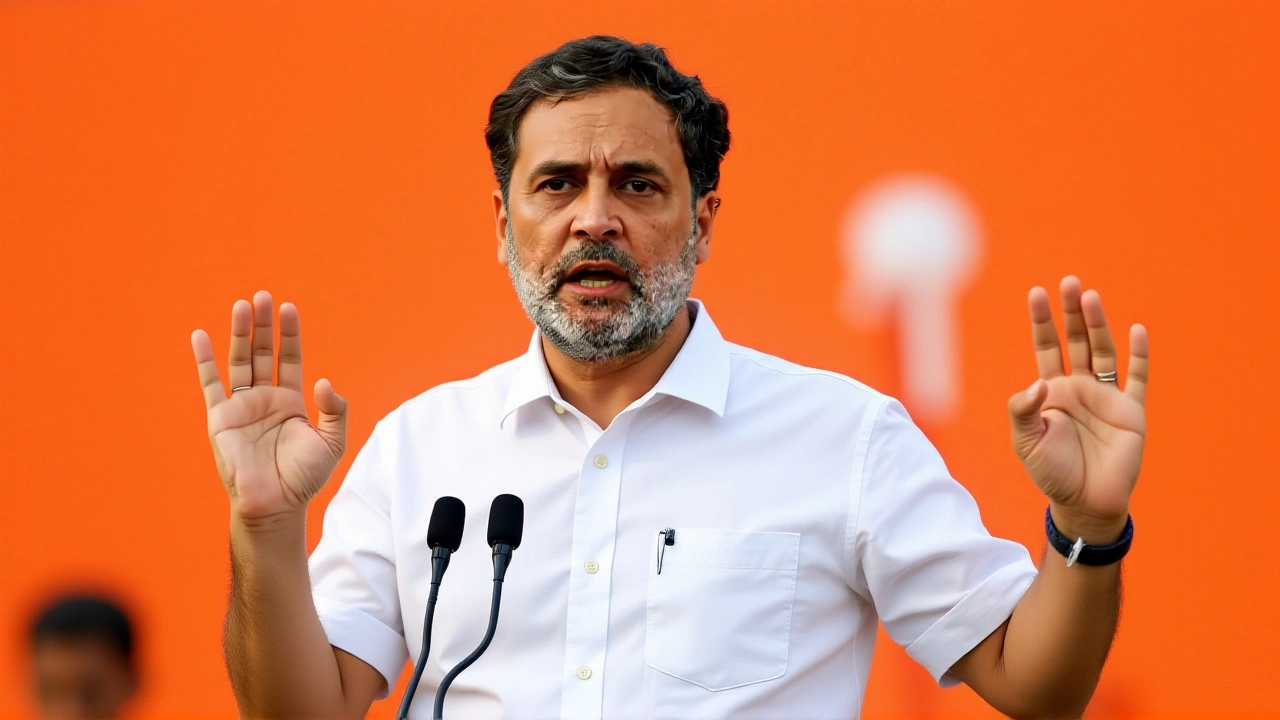
When Rahul Gandhi, Leader of the Opposition in the Lok Sabha, walked out of a high-stakes meeting at 7 Lok Kalyan Marg in New Delhi on May 13, the air was thick with political tension. He didn't just leave; he fired off a formal letter to Prime Minister Narendra Modi, declaring that he would not serve as a "rubber stamp" for the appointment of the next Central Bureau of Investigation (CBI) Director.
The clash wasn't just about procedure—it was about power. Gandhi, who is a statutory member of the three-member selection committee alongside the Prime Minister and the Chief Justice of India (or their nominee), accused the government of bypassing transparency protocols. By sharing the letter publicly on X (formerly Twitter), he turned a closed-door bureaucratic dispute into a national conversation about institutional independence.
A Constitutional Clash Over Transparency
Here’s the thing: the CBI Director isn’t appointed by a simple vote. It requires consensus from a high-powered panel. The rules are clear—all members must receive detailed dossiers on shortlisted candidates, including self-appraisal reports and 360-degree feedback assessments, well in advance of the meeting. This ensures everyone can make an informed decision.
But according to Gandhi, that didn’t happen. He claimed the government failed to provide these critical documents in time for the May 13 meeting. Without them, how could he possibly evaluate the candidates fairly? In his letter, he wrote bluntly: "The Leader of the Opposition cannot be a rubber stamp." It’s a sharp rebuke, suggesting the process was designed to legitimize a pre-decided outcome rather than genuinely select the best candidate.
This isn’t the first time this has happened. Back on May 5, 2025, during a previous committee session, Gandhi raised similar alarms. He noted then that the window given to review names was too narrow, leaving little room for meaningful scrutiny. Now, less than two weeks later, the same pattern allegedly repeated itself.
Accusations of Political Weaponization
The stakes go beyond one job appointment. Gandhi’s letter took aim at what he describes as a broader trend: the alleged misuse of investigative agencies like the CBI against critics, journalists, and political opponents. He argued that when such accusations fly, the integrity of the agency’s leadership becomes paramount. A compromised directorate undermines public trust in the entire justice system.
"In such a backdrop, it is crucial that the selection process remains impartial, independent, and transparent," Gandhi stated in his correspondence. He emphasized that denying the opposition leader adequate information reduces a constitutional safeguard to mere theater. If the process is flawed, the resulting appointment lacks legitimacy.
Analysts point out that this move forces the government’s hand. By making the complaint public, Gandhi prevents the issue from being buried in administrative files. It puts pressure on the Executive to either justify its actions or risk further erosion of credibility. For citizens watching from the sidelines, it raises uncomfortable questions about who really controls India’s premier investigative body.
The Role of the Selection Committee
To understand why this matters, you need to know how the committee works. Established under the Delhi Special Police Establishment Act, the panel includes:
- The Prime Minister of India
- The Leader of the Opposition in the Lok Sabha
- The Chief Justice of India (or a nominee)
Each member holds equal weight. There’s no majority rule here—if consensus isn’t reached, the process stalls. That’s why Gandhi’s refusal to sign off without proper documentation is significant. It’s not just dissent; it’s a procedural block. His stance reinforces the idea that the Opposition’s role isn’t ceremonial but substantive.
Historically, these committees have operated behind closed doors. Disputes were rare, and when they occurred, they stayed private. Gandhi’s decision to broadcast his objections marks a shift toward greater accountability—or perhaps deeper polarization, depending on your perspective.
What Happens Next?
The immediate future is uncertain. The committee must still finalize its recommendation. Will they reconvene? Will the government release the missing documents retroactively? Or will they proceed despite the objection? These details remain unclear as of now.
Legal experts suggest that if the process is challenged in court, judges will look closely at whether due diligence was followed. Did the committee act in good faith? Were all parties treated equally? The answers could set a precedent for future appointments of heads of investigative agencies.
For now, the spotlight remains on 7 Lok Kalyan Marg. The walls may be thick, but the echoes of Gandhi’s protest are loud. Whether this leads to reform or renewed conflict depends on how both sides choose to navigate the coming days.
Frequently Asked Questions
Who selects the CBI Director in India?
The CBI Director is selected by a high-level committee comprising the Prime Minister, the Leader of the Opposition in the Lok Sabha, and the Chief Justice of India (or their nominee). Consensus among all three members is required for any appointment, ensuring checks and balances within the executive and judiciary.
Why did Rahul Gandhi refuse to approve the selection?
Gandhi objected because he claimed the government did not provide essential candidate evaluation reports, such as self-appraisals and 360-degree feedback, in sufficient time before the meeting. He argued this lack of transparency rendered the process a formality rather than a genuine assessment.
What does 'rubber stamp' mean in this context?
Calling himself a 'rubber stamp' implies that Gandhi felt the government expected him to blindly approve a pre-selected candidate without exercising independent judgment. He rejected this notion, asserting his right to scrutinize candidates thoroughly based on complete information.
Has this kind of dispute happened before?
Yes, Gandhi raised similar concerns during a previous committee meeting on May 5, 2025, citing insufficient time to review candidate profiles. This indicates a recurring tension between the ruling party and the opposition regarding the transparency and fairness of the selection mechanism.
How might this affect the CBI's independence?
If the selection process is perceived as biased or opaque, it could undermine public confidence in the CBI’s ability to investigate cases impartially. Critics argue that political interference compromises the agency’s neutrality, while supporters maintain that the current procedures uphold constitutional norms.